
Godrej Opens Asia’s Largest Integrated Soap Manufacturing Facility in Madhya Pradesh
- shebantidas
- Aug 31
- 2 min read
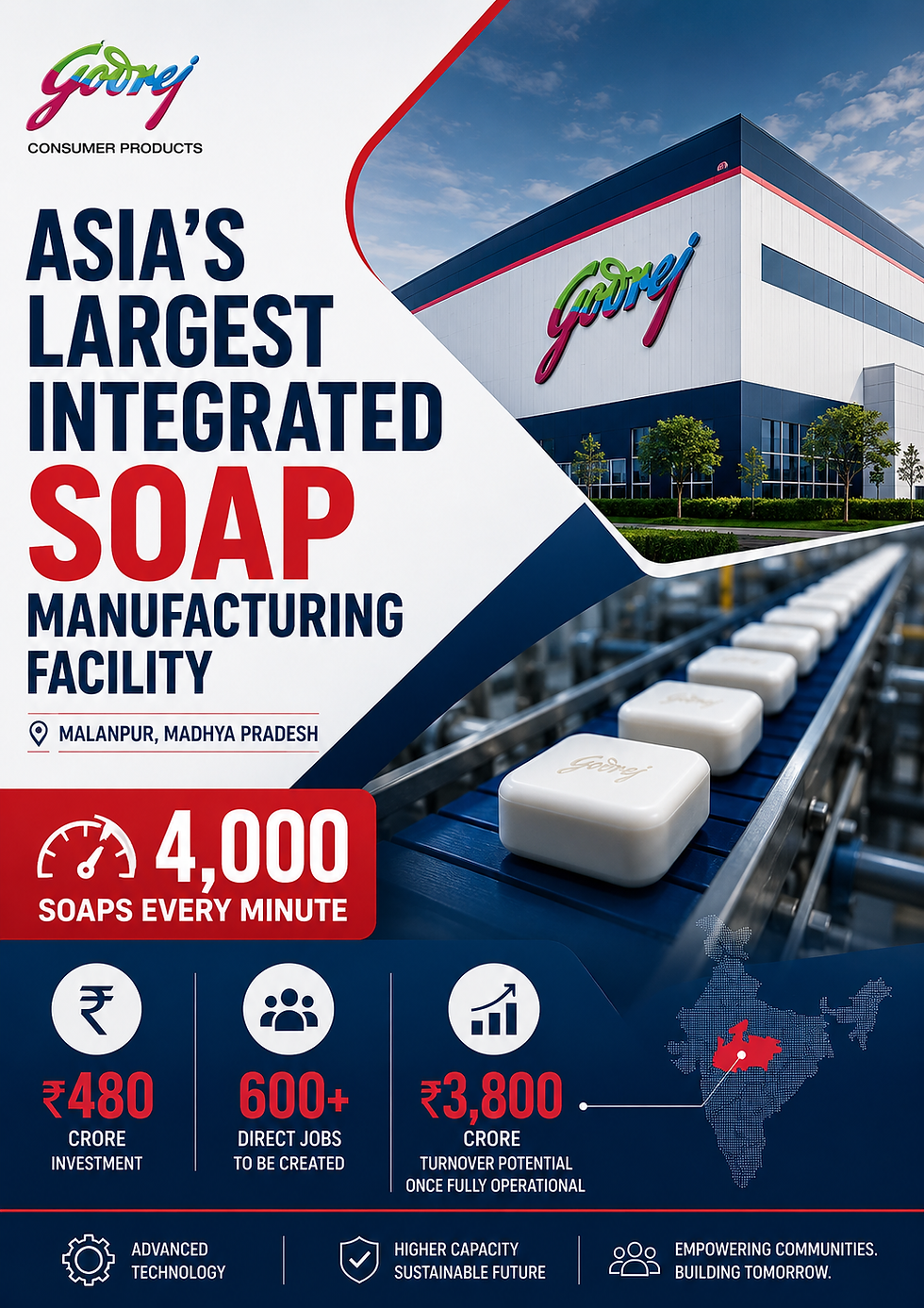
Godrej Consumer Products has inaugurated a new ₹480 Cr manufacturing unit at Malanpur, Madhya Pradesh, expanding one of its key production hubs in India.
The new facility marks the company’s fourth manufacturing unit at the Malanpur site and has made the location Asia’s largest integrated soap manufacturing facility, according to the company.
4,000 soap bars every minute
One of the most striking numbers from the expansion is its production capacity.
The new manufacturing lines can produce up to 4,000 soap bars per minute, while the Malanpur site's overall soap manufacturing capacity has crossed 2 lakh metric tonnes annually.
The facility is also designed around automation and digitisation, with high-speed production lines operating at nearly three times the speed of GCPL's existing lines, according to the company.
Beyond soap
The expanded manufacturing hub will support several categories across GCPL's portfolio, including Cinthol, Godrej No.1, GoodKnight, Godrej Aer and Godrej Expert Hair Colour.
The company expects the facility to generate approximately ₹3,800 Cr in turnover once fully operational and create close to 600 additional direct jobs.
The latest investment also takes GCPL's cumulative investment at Malanpur to more than ₹850 Cr, underscoring the site's growing importance within the company's manufacturing network.
A larger manufacturing story
The Malanpur expansion comes as India continues to attract large investments into manufacturing and supply-chain infrastructure.
For GCPL, the project represents more than additional capacity. It combines scale, automation and multi-category production to strengthen the company's ability to serve India's growing consumer market.
For Madhya Pradesh, it adds another major industrial facility to the state's manufacturing ecosystem and strengthens Malanpur's position as a production hub.
₹480 Cr invested. 4,000 bars a minute. 600+ new direct jobs. A glimpse of what India's next generation of manufacturing capacity is beginning to look like.


Comments